Bitcoin has sparked one of the most important financial debates of the 21st century: is Bitcoin really money? For some Americans, Bitcoin is a speculative asset. For others, it is a revolutionary form of digital money. However, to answer this question honestly, it is necessary to understand how Bitcoin works from the beginning, why it was created, and how it functions in practice within the modern financial system.
Although Bitcoin is often compared to the U.S. dollar, it operates under completely different principles. Because of that, confusion is common. Many people hear the word “cryptocurrency” and immediately think of risk, volatility, or complexity. However, when explained step by step, Bitcoin becomes much easier to understand.
This comprehensive guide was created to explain what Bitcoin is, whether Bitcoin can be considered money, and how the cryptocurrency works in practice, especially in the context of the American market and economy. More importantly, this article connects technology, economics, and real-life use in a way that makes sense for everyday readers.
What Is Money, After All?
Before understanding Bitcoin, it is essential to understand what money actually is. Traditionally, money serves three main functions: a medium of exchange, a store of value, and a unit of account.
In the United States, the dollar fulfills these roles because people trust it. That trust comes from government backing, legal enforcement, and widespread acceptance. However, history shows that money has taken many forms, including gold, silver, paper notes, and even digital balances.
Therefore, money is not defined by its physical form. Instead, money exists because people agree it has value. This concept is crucial for understanding why Bitcoin can be considered money by millions of people worldwide.

What Is Bitcoin in Simple Terms
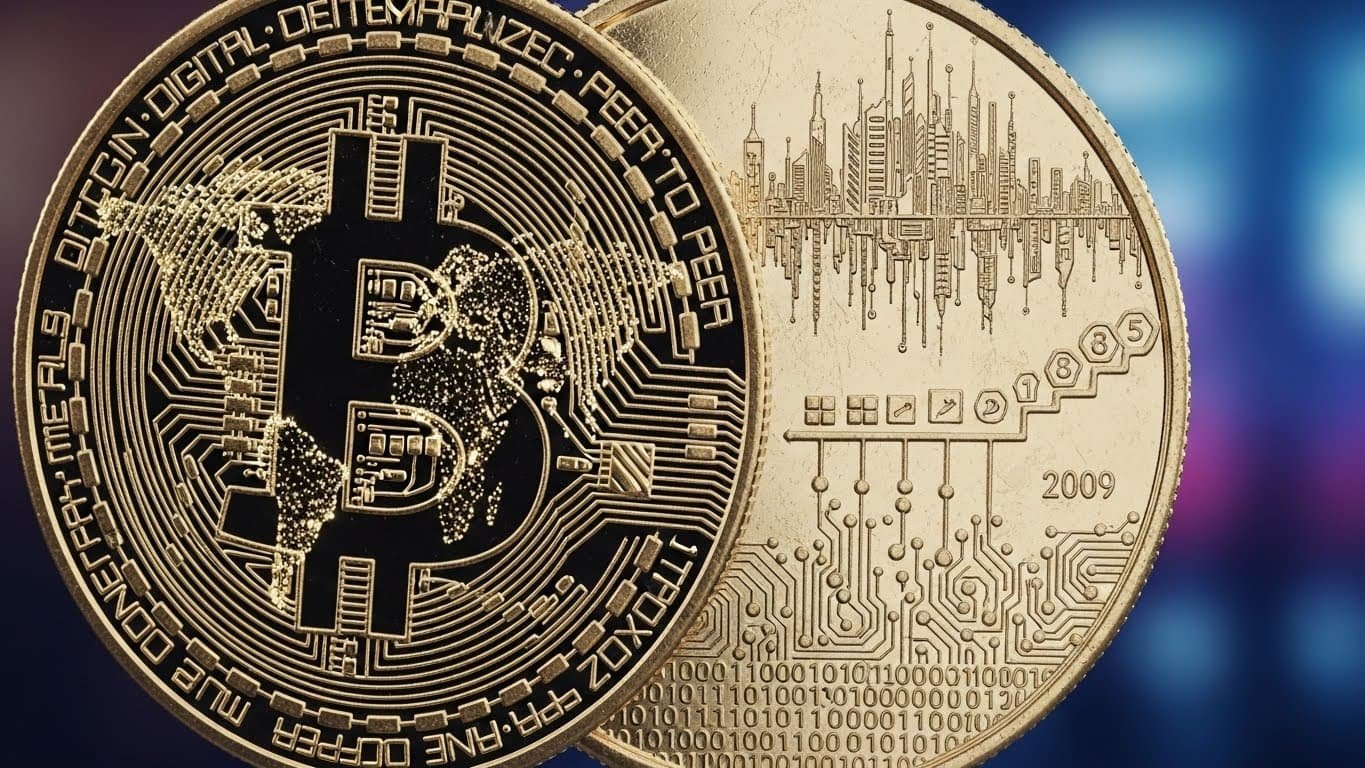
Bitcoin is a decentralized digital currency that allows people to send and receive value directly, without banks or intermediaries. In practice, Bitcoin functions as peer-to-peer electronic money, operating on a global network.
Unlike traditional currencies, Bitcoin is not issued by a central authority. Instead, it is governed by mathematical rules and cryptographic security. Because of this structure, Bitcoin is often described as trustless, meaning trust is placed in code rather than institutions.
Additionally, Bitcoin has a fixed supply of 21 million coins. This scarcity is intentional and plays a major role in Bitcoin’s value proposition, especially when compared to inflationary fiat currencies.
Why Bitcoin Was Created
Bitcoin was created in 2008, during the global financial crisis. At that time, banks failed, governments bailed out institutions, and confidence in the financial system collapsed.
The creator of Bitcoin, known as Satoshi Nakamoto, introduced Bitcoin as a response to these failures. The goal was to create a system where people could exchange value without relying on banks, governments, or centralized control.
Because of that, Bitcoin was built on the principles of financial freedom, transparency, and individual responsibility. These principles continue to attract users, especially those seeking alternatives to traditional finance.
How Bitcoin Works From the Beginning
At its core, Bitcoin operates through a technology called blockchain. The blockchain is a public, distributed ledger that records every Bitcoin transaction ever made.
When a transaction occurs, it is broadcast to a network of computers called nodes. These nodes verify the transaction using predefined rules. Once verified, the transaction is grouped into a block.
Then, the block is added to the blockchain in chronological order. As a result, Bitcoin transactions become permanent, transparent, and extremely difficult to alter.

Understanding Blockchain Technology
The blockchain is essential to Bitcoin’s security. Each block contains data from the previous block, creating a continuous chain. Because of this structure, changing one block would require changing all subsequent blocks.
Therefore, blockchain technology eliminates the need for centralized trust. Instead of trusting a bank, users trust cryptography and decentralized consensus.
In addition, the blockchain is public. Anyone can verify transactions, which increases transparency and reduces fraud.
The Role of Bitcoin Mining
Bitcoin mining is the process that secures the network and validates transactions. Miners use computational power to solve complex mathematical problems.
When a miner successfully validates a block, they receive a Bitcoin reward. However, this reward decreases every four years during an event called the Bitcoin halving.
This system controls Bitcoin’s supply and reinforces scarcity. Over time, fewer new bitcoins enter circulation, which directly impacts long-term value dynamics.
Is Bitcoin Really Money?
To answer this question, Bitcoin must be evaluated against the functions of money.
As a medium of exchange, Bitcoin allows peer-to-peer payments without intermediaries. Although acceptance is still growing, many businesses in the U.S. already accept Bitcoin.
As a store of value, Bitcoin has shown strong long-term appreciation, despite short-term volatility. Many investors view it as “digital gold.”
As a unit of account, Bitcoin is less commonly used. Prices are still usually denominated in dollars. However, this does not disqualify Bitcoin as money, especially in its early stages.
Therefore, Bitcoin meets many characteristics of money, even if adoption is still evolving.
Bitcoin vs the U.S. Dollar
Bitcoin and the U.S. dollar differ fundamentally. The dollar is centralized and inflationary, while Bitcoin is decentralized and scarce.
Because the Federal Reserve can print dollars, inflation reduces purchasing power over time. Bitcoin, on the other hand, cannot be inflated beyond its fixed supply.
As a result, Bitcoin appeals to those seeking protection against inflation and monetary expansion.
How to Store Bitcoin Safely
To use Bitcoin, users need a Bitcoin wallet. Wallets store private keys, which grant access to funds.
There are several types of wallets, including hardware wallets, mobile wallets, and custodial wallets. Hardware wallets are considered the most secure for long-term storage.
Security is essential because Bitcoin transactions are irreversible. Therefore, protecting private keys is a top priority.
How to Buy Bitcoin in the United States
Buying Bitcoin in the U.S. is relatively simple. First, users choose a regulated exchange such as Coinbase, Kraken, or Gemini.
After identity verification, users link a payment method and purchase Bitcoin using dollars. Then, for security reasons, many users transfer Bitcoin to a personal wallet.
This process makes Bitcoin accessible to beginners and experienced investors alike.
Bitcoin as an Investment Asset
In the American market, Bitcoin has become a recognized investment asset. Institutional investors, ETFs, and public companies now hold Bitcoin.
Many investors see Bitcoin as a hedge against inflation and economic uncertainty. However, volatility remains a factor.
Therefore, responsible investing requires education, long-term thinking, and proper risk management.
Risks and Challenges of Bitcoin
Despite its advantages, Bitcoin has risks. Price volatility can lead to emotional decisions. Additionally, regulatory uncertainty still exists.
Security mistakes, such as losing private keys, can result in permanent loss. Because of that, education is critical.
Understanding risks allows users to interact with Bitcoin more safely and confidently.
Bitcoin Regulation in the U.S.
In the United States, Bitcoin is treated as property for tax purposes. Capital gains taxes apply when selling or spending Bitcoin.
Regulatory clarity has improved, which has increased institutional adoption. However, staying informed remains essential.
Real-World Uses of Bitcoin
Bitcoin is used for international remittances, online payments, and financial inclusion. In many cases, it offers faster and cheaper transactions than traditional systems.
As adoption grows, Bitcoin’s practical use continues to expand.
The Future of Bitcoin
Bitcoin’s future depends on adoption, regulation, and technological development. However, its decentralized nature makes it resilient.
As digital finance evolves, Bitcoin remains a strong alternative to traditional money systems.
Understanding Bitcoin today prepares individuals for tomorrow’s financial landscape.
Learn now how Bitcoin was created ( BITCOIN )
Final Conclusion
Bitcoin challenges traditional definitions of money. While it differs from fiat currencies, it fulfills many monetary functions.
By understanding how Bitcoin works from the beginning, individuals can make informed decisions. Bitcoin is not just speculation; it is a financial innovation reshaping the global economy.
Learning about Bitcoin is learning about the future of money.