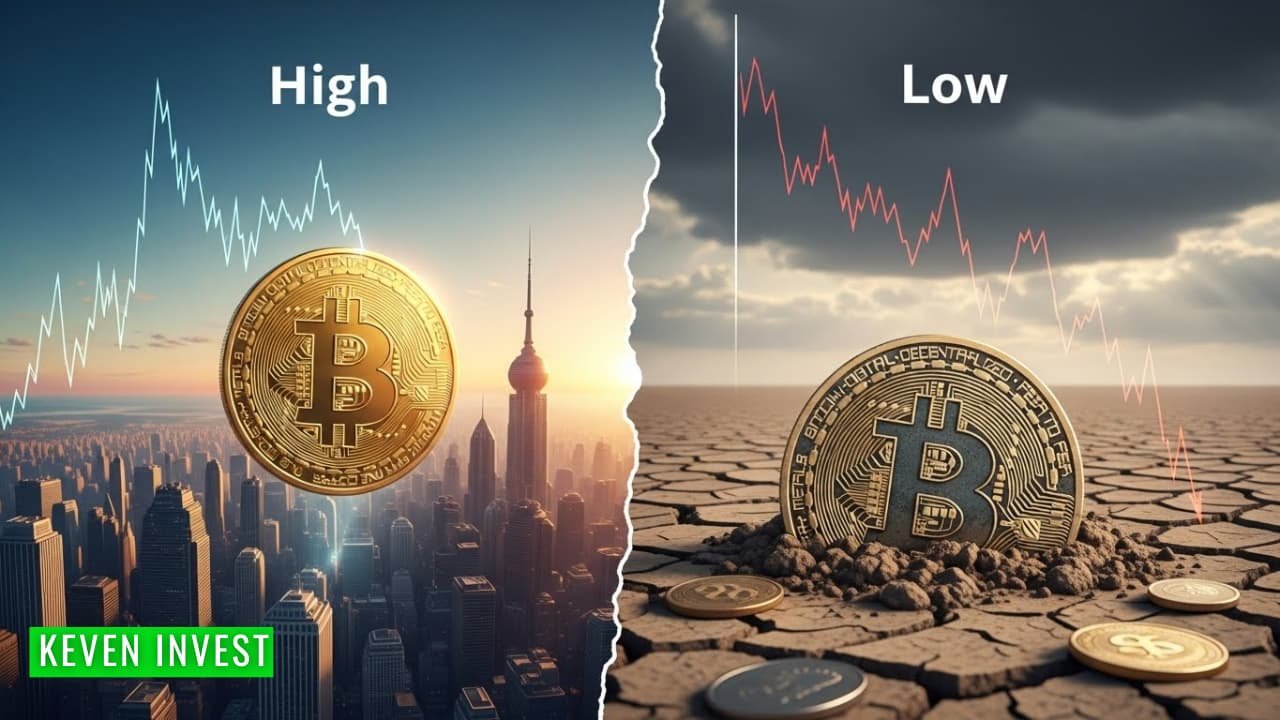
Bitcoin sparks intense emotions around the world, but it is in the American market that its price movements receive even more attention. Every single day, investors watch the price of Bitcoin rise and fall in what seems like an unpredictable way, and then the big question arises: why does the price of Bitcoin go up and down so much?
This mega article was created to deliver real value, with an explanation that is informative, educational, deep, and didactic, connecting you to the U.S. economic scenario, human behavior, and the invisible forces that move the cryptocurrency market. Here, you will not find empty promises, but solid knowledge, presented in clear, human, and easy-to-understand language.
What Is Bitcoin and Why It Changed the Financial Market
Bitcoin is not just a digital currency. It represents a historic disruption of the traditional financial system. Created in 2009, after the American financial crisis of 2008, Bitcoin was born as a response to the loss of trust in banks and central institutions.
Unlike the U.S. dollar, which is controlled by the Federal Reserve, Bitcoin is decentralized, limited, and governed by code. This means that no government, not even the United States, can print more Bitcoin whenever it wants. And that is exactly what makes the price of Bitcoin so volatile, but also so fascinating.
While traditional currencies depend on political decisions, Bitcoin depends on trust, demand, and collective behavior.

Supply and Demand: The Main Engine Behind Bitcoin’s Price
Every explanation of why the price of Bitcoin goes up and down so much begins with a basic economic concept: supply and demand.
When demand for Bitcoin increases while supply remains limited, the price goes up. But when confidence drops and more people want to sell than buy, the price falls. This happens much more intensely with Bitcoin because its supply is strictly limited to 21 million units.
In the American market, large funds, corporations, and institutional investors move billions of dollars. So, when one of these players decides to buy or sell Bitcoin, the impact on the price is immediate and significant.
Bitcoin’s Programmed Scarcity and Its Psychological Impact
Bitcoin’s scarcity is not only technical; it is emotional. Knowing there is a maximum supply creates a sense of urgency. And that urgency directly influences the price of Bitcoin.
In addition, there is a critical event known as the halving, which occurs approximately every four years. During this event, the number of new Bitcoins created is cut in half. This means less supply entering the market.
Historically, after each halving, the price of Bitcoin has gone through strong appreciation cycles. But before that, expectations generate speculation, and speculation generates extreme volatility.
The Central Role of the United States in Bitcoin’s Volatility
The United States is the financial heart of the world, and that includes the cryptocurrency market. Decisions made in Washington or by the Federal Reserve echo globally.
When the SEC approves Bitcoin ETFs, the market reacts with enthusiasm. But when speeches about tighter regulation or restrictions appear, fear spreads quickly. And fear, in the Bitcoin market, always impacts price.
The price of Bitcoin goes up and down because the United States influences:
-
Global liquidity
-
Institutional confidence
-
Large-scale adoption
-
Economic narrative
Investor Psychology: Fear, Greed, and Emotion
One of the most underestimated factors behind Bitcoin price movements is human psychology. Markets are not driven only by numbers, but by emotions.
When Bitcoin starts rising, greed takes over. People buy because they see others making money. This phenomenon is known as FOMO (Fear of Missing Out). But when the market turns, sentiment quickly shifts to fear, and mass selling begins.
In the American market, where retail and institutional investors participate heavily, this dance between fear and greed creates fast and intense price movements.
The Influence of American Media and Social Networks
The media plays a powerful role in shaping the Bitcoin narrative. Positive news from outlets like Bloomberg or CNBC can push the price of Bitcoin higher, but negative headlines can bring it down within minutes.
In addition, social media amplifies everything. Comments from opinion leaders, CEOs of major companies, and famous investors create emotional waves. And these waves turn into buying and selling pressure.
Bitcoin exists in an environment where information flows in real time, and that greatly increases its volatility.

Bitcoin: Speculative Asset or Store of Value?
In the American market, there is an ongoing debate: is Bitcoin a store of value or just a speculative asset?
The most honest answer is: it is both.
For long-term investors, Bitcoin is seen as protection against inflation and the devaluation of the dollar. For short-term traders, it is an opportunity for quick profits.
This coexistence of different strategies creates an unstable market, where the price of Bitcoin rises and falls easily.
U.S. Monetary Policy and Its Direct Impact on Bitcoin
Decisions made by the Federal Reserve directly influence investor behavior. When interest rates are low, money flows into risk assets like stocks and cryptocurrencies. Then, the price of Bitcoin goes up.
But when interest rates rise, the environment changes. Investors seek safety in U.S. Treasury bonds, and Bitcoin experiences declines.
In other words, Bitcoin reacts not only to what is happening, but to what the market expects to happen in the U.S. economy.
Liquidity, Market Size, and Sharp Price Movements
Even though it is massive, the Bitcoin market is still smaller than the U.S. stock market. This means large orders can move prices more easily.
During moments of crisis or euphoria, liquidity dries up. And when liquidity disappears, the price of Bitcoin moves even more aggressively.
That is why double-digit price drops or rallies are not rare in the cryptocurrency world.
Large Investors and the Influence of “Whales”
Another important factor is the presence of whales, large Bitcoin holders. When these entities move significant amounts, the market reacts.
Even in the more regulated American market, these movements create signals that are interpreted as potential buying or selling. And that triggers chain reactions.
This behavior contributes to the perception that the price of Bitcoin goes up and down without warning, when in reality it is responding to strategic movements.

The Growing Maturity of the Bitcoin Market
Despite all this volatility, Bitcoin is maturing. The entry of American banks, ETFs, professional asset managers, and clearer regulation tends to reduce extremes over time.
But that does not mean complete stability. Bitcoin will continue to be volatile because it is global, scarce, and emotional. The difference is that this volatility tends to become more rational.
Why Understanding Volatility Changes Everything for Investors
Those who understand why the price of Bitcoin goes up and down so much begin to see the market differently. Volatility stops being an enemy and becomes a natural characteristic.
In the American market, experienced investors know that:
-
Emotion destroys results
-
Strategy protects capital
-
Long-term vision reduces risk
Understanding Bitcoin is understanding human behavior on a global scale.
Bitcoin as a Mirror of the Modern World
The price of Bitcoin reflects the world in real time. It responds to political decisions, economic crises, technological advances, and collective emotions.
That is why it rises and falls so much. Because the world changes fast, and Bitcoin follows that pace.
More than a financial asset, Bitcoin is an expression of the transformation of the financial system, especially at the heart of global capitalism: the United States.
Conclusion: Volatility Is Not a Weakness, It Is an Identity
The price of Bitcoin goes up and down because it is free, decentralized, and driven by people. It follows no orders, never closes on weekends, and does not ignore emotions.
For those who understand this, Bitcoin stops being scary. It becomes a powerful tool for learning, growth, and future vision.
And perhaps this is the greatest truth: Bitcoin does not test the market, it tests the investor.