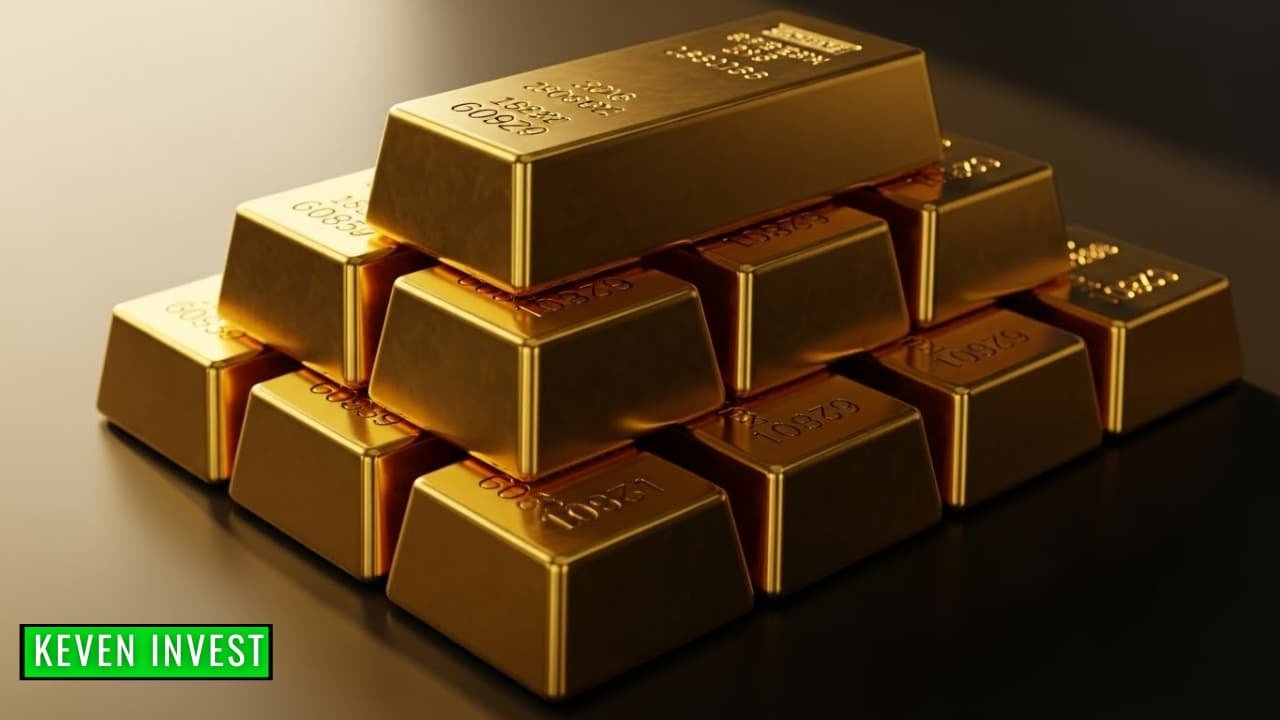
The year 2025 was exceptional for gold. The precious metal posted a gain of nearly 65%, significantly outperforming stocks, bonds, and even cryptocurrencies. This strong performance caught investors’ attention and raised a key question: can gold reach new record highs in 2026, or is the rally nearing its end?
To answer that, it is important to understand why gold rose so sharply, which forces remain in play, and which scenarios could influence prices in the coming year.
Why gold rose so much in 2025
Gold’s powerful rally did not happen for a single reason. It was driven by a combination of economic, political, and financial factors that increased demand for safety.
The first factor was the rise in global uncertainty. Geopolitical conflicts, including the war in Ukraine and tensions in the Middle East, pushed global risk higher. In times like these, investors tend to move toward assets perceived as safer — and gold has historically filled that role.
In addition, U.S. trade tariffs revived concerns about inflation. When inflation risks increase, gold often benefits because it is viewed as a store of value that helps preserve purchasing power over time.
Another key driver was the weakening of the U.S. dollar. In 2025, the dollar lost roughly 10% against a basket of global currencies. Because gold is priced in dollars, a weaker dollar makes the metal cheaper for foreign buyers, boosting demand.
The role of the Federal Reserve and interest rates
Decisions by the Federal Reserve (Fed) also played a major role. The U.S. central bank cut interest rates, which made non-yielding assets such as gold more attractive.
When interest rates are high, investors tend to favor income-generating assets like bonds. But when rates fall, the opportunity cost of holding gold decreases, making it more competitive.
This environment was reinforced by concerns over global debt levels and a prolonged U.S. government shutdown, both of which increased perceived financial risk.
ETFs and central banks drive demand
Flows into gold ETFs clearly illustrate the strength of the rally. Exchange-traded funds backed by physical gold recorded inflows for several consecutive months, pushing total assets above $500 billion. This indicates sustained demand from both institutional and retail investors.
Central banks also played a crucial role. As the dollar weakened, many countries diversified their reserves by increasing gold holdings. A recent survey shows that 95% of central banks expect to increase their gold reserves, creating long-term, structural demand.
What could happen to gold in 2026
Looking ahead to 2026, most analysts expect gold to remain strong, but with more moderate gains. The most common forecasts place prices between $4,000 and $5,000 per troy ounce.
Some banks, including Goldman Sachs, see potential for further upside if investors reallocate portfolios, reducing exposure to stocks and bonds and increasing allocations to gold, particularly through ETFs.
Other institutions note that geopolitical and economic risks could still push gold toward the $5,000 level if global uncertainty intensifies.
When could gold decline?
Despite the generally positive outlook, there is a clear risk for gold: stronger-than-expected global economic growth. If growth accelerates, inflation could rise, forcing the Fed to raise interest rates. Higher rates typically strengthen the dollar and reduce gold’s appeal.
This is the main scenario in which analysts expect a more sustained pullback in gold prices. Otherwise, expectations range from price stability to moderate gains.
Physical demand as a source of price support
Another important factor is physical demand, especially in Asia and India. Despite higher prices, demand for gold jewelry and bars remained strong in these regions. This demand helps create a price floor, limiting downside risk.
In addition, central bank purchases are considered non-cyclical, meaning they are less sensitive to short-term economic fluctuations, which further supports the market.
Conclusion: does gold still make sense for investors?
Gold’s performance in 2025 was extraordinary, driven by global uncertainty, lower interest rates, a weaker dollar, and strong institutional demand. For 2026, the consensus is that gold should remain relevant as a hedge and diversification tool, even if returns are less dramatic.
In short, gold is unlikely to repeat the explosive gains of 2025, but the structural forces supporting its price are still in place. For investors, this reinforces gold’s role as a strategic asset in times of uncertainty, especially within a well-diversified portfolio.
- Also study about Bitcoin, I guarantee you’ll like it! – LEARN NOW