The cryptocurrency market has grown exponentially in recent years, especially in the American market and economic landscape, where institutional investors, technology companies, and individual users are increasingly involved with Bitcoin, Ethereum, and other digital assets. However, despite all this popularity, one essential question still remains for many people: how are cryptocurrencies stored?
Understanding how digital wallets work is not just a technical matter, but a fundamental step toward financial security, autonomy, and the protection of digital wealth. After all, in the crypto universe, whoever controls the wallet controls the assets.
In this complete, educational, and deeply didactic article, you will understand what digital wallets are, how they work, what types exist, how the American market uses these solutions, what the risks are, best security practices, and how to choose the ideal wallet for your profile. All of this in a clear, human, and easy-to-understand language, connecting technology, market, and behavior.
What It Means to Store Cryptocurrencies in Practice
When we talk about storing cryptocurrencies, many people imagine something similar to keeping money in a traditional bank account. But that is not exactly how it works.
Cryptocurrencies are not physically stored in a specific place. Instead, they exist on a blockchain, which is a public, decentralized, and immutable ledger. What the digital wallet actually stores are the cryptographic keys that allow access, movement, and proof of ownership of these assets.
👉 In other words:
-
The blockchain records who owns what
-
The wallet proves that you are that owner
That is why understanding how digital wallets work is essential for anyone who wants to operate safely in the American and global crypto market.
- If you want to learn more about Bitcoin, altcoins, and the main movements in the crypto market, visit Keven Crypto and get access to complete, informative content designed for those who want to grow in this market.
- LINK – https://kevencrypto.com/
What Is a Cryptocurrency Digital Wallet
A cryptocurrency digital wallet (crypto wallet) is a software, device, or service that allows users to store, send, receive, and manage digital assets such as Bitcoin, Ethereum, stablecoins, and various tokens.
It works as a bridge between the user and the blockchain, offering a simple interface to interact with an extremely complex technology.
Main Functions of a Digital Wallet
-
Store public and private keys
-
Digitally sign transactions
-
Check blockchain balances
-
Interact with decentralized applications (DeFi, NFTs, Web3)
In the American market, digital wallets are widely used not only by investors, but also by companies, developers, funds, and financial platforms.
Public Key and Private Key: The Core of Crypto Security
To truly understand how cryptocurrencies are stored, it is mandatory to understand the concept of cryptographic keys.
Public Key
The public key works like an address. It is what you share to receive cryptocurrencies. It can be compared to a bank account number.
Private Key
The private key is the most important element of the entire system. It works like a master password, allowing you to:
-
Move assets
-
Sign transactions
-
Prove ownership of cryptocurrencies
⚠️ Whoever has the private key owns the assets.
In the American market, this concept is often summarized by the phrase:
“Not your keys, not your coins.”
Types of Digital Wallets: An Overview
There are several types of cryptocurrency digital wallets, each with its own advantages, disadvantages, and specific use cases. Choosing the right one depends on the investor profile, the desired level of security, and the frequency of use.
In general, wallets are divided into two major groups:
-
Hot Wallets
-
Cold Wallets
Let’s understand each one in detail.
Hot Wallets
Hot wallets are wallets connected to the internet. They offer convenience, speed, and ease of use, making them very popular in the American market, especially among beginners and active traders.
Main Characteristics of Hot Wallets
-
Internet-connected
-
Fast access to funds
-
Ideal for frequent transactions
-
Lower security compared to cold wallets
Types of Hot Wallets
Mobile Wallets
These are apps installed on smartphones. Common examples in the American market include:
-
Coinbase Wallet
-
Trust Wallet
-
MetaMask Mobile
They are practical, but require caution regarding:
-
Malware
-
Phone theft
-
Phishing attacks
Desktop Wallets
Installed on computers, they offer more control but also depend on the security of the operating system.
Web Wallets
They operate directly in the browser. They are extremely convenient, but also more exposed to attacks.
👉 Hot wallets are ideal for small amounts and daily use, but not for storing large sums.
Cold Wallets
Cold wallets are considered the gold standard of security for cryptocurrency storage. They are not connected to the internet, drastically reducing the risk of attacks.
In the American market, institutional investors and long-term holders prioritize this type of solution.
Main Characteristics of Cold Wallets
-
Offline storage
-
Maximum security
-
Ideal for long-term holding
-
Less practical for daily use
Types of Cold Wallets
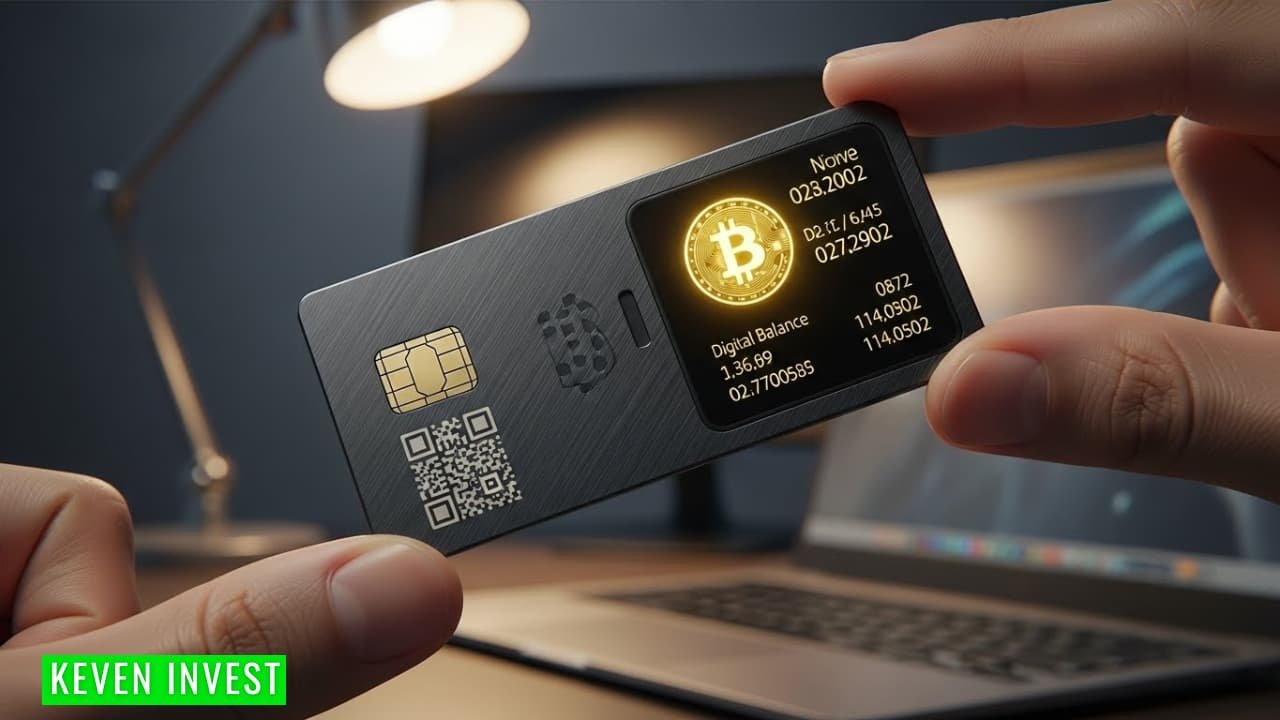
Hardware Wallets
These are physical devices, similar to a USB drive, designed exclusively to store private keys. Popular examples in the U.S. include:
-
Ledger
-
Trezor
These devices:
-
Isolate the private key
-
Sign transactions offline
-
Protect against malware
Paper Wallets
They consist of a physical printout of the private key. Although secure against digital attacks, they are vulnerable to:
-
Loss
-
Physical damage
-
Human error
Custodial vs. Non-Custodial: Who Controls Your Cryptocurrencies
Another extremely important concept in the American crypto market is the difference between custodial and non-custodial wallets.
Custodial Wallets
In custodial wallets, a company or platform controls the private keys. This is the case with centralized exchanges such as:
-
Coinbase
-
Binance US
-
Kraken
Advantages:
-
Ease of use
-
Account recovery options
-
Customer support
Disadvantages:
-
Less autonomy
-
Risk of account freezing
-
Dependence on third parties
Non-Custodial Wallets
Here, the user has full control over the private keys. Examples include:
-
MetaMask
-
Ledger
-
Trust Wallet
👉 In the long run, the American market increasingly values self-custody, as it reinforces the true purpose of cryptocurrencies: financial freedom.
How the American Market Stores Cryptocurrencies Today
In the United States, cryptocurrency storage has evolved rapidly, driven by:
-
Clearer regulation
-
Institutional adoption
-
Growth of the DeFi sector
Institutional Investors
They use professional custody solutions with:
-
Cold storage
-
Multi-signature wallets (multisig)
-
Insurance against losses
Individual Investors
They usually combine strategies:
-
Hot wallets for daily use
-
Cold wallets for long-term storage
This hybrid approach is considered one of the best security practices.
Security in Cryptocurrency Storage
Digital wallet security is one of the most critical topics in the crypto ecosystem. Simple mistakes can lead to the total loss of assets, with no possibility of recovery.
Essential Best Practices
-
Never share your private key
-
Use two-factor authentication
-
Back up your seed phrase
-
Avoid clicking on suspicious links
-
Prefer dedicated devices
In the American landscape, educational campaigns constantly reinforce that responsibility lies with the user.
Seed Phrase: The Last Line of Defense
The seed phrase is a sequence of words that allows you to recover your digital wallet. It is generated when the wallet is created and must be stored with extreme care.
👉 Whoever has the seed phrase can recreate the wallet anywhere in the world.
Therefore:
-
Never store it online
-
Never send it by email
-
Prefer secure physical storage
Digital Wallets and DeFi: A New Financial Era
Digital wallets are also the gateway to DeFi (Decentralized Finance), a sector that is rapidly growing in the United States.
With a non-custodial wallet, users can:
-
Lend assets
-
Earn staking rewards
-
Buy NFTs
-
Participate in DAOs
All of this without intermediaries, reinforcing the central role of digital wallets in the future of finance.
How to Choose the Ideal Digital Wallet
Choosing the best wallet depends on a few key factors:
Questions You Should Ask Yourself
-
How much value do I plan to store?
-
Will I move funds frequently?
-
Do I prioritize convenience or maximum security?
-
Do I want full control over my keys?
Practical Recommendations
-
Beginners: simple hot wallet + reliable exchange
-
Intermediate users: hot + cold wallet
-
Advanced users: cold wallet + multisig
The Future of Digital Wallets in the American Market
The future points to wallets that are increasingly:
-
Integrated with the traditional financial system
-
Compatible with digital identity
-
Focused on user experience
-
Regulated, but without losing decentralization
In the United States, major companies are already investing in smart wallets that combine security, usability, and compliance.
Conclusion: Storing Cryptocurrencies Is a Strategic Decision
Understanding how cryptocurrencies are stored goes far beyond technology. It is about responsibility, autonomy, and long-term vision.
Digital wallets are the true heart of the crypto ecosystem. They connect people, markets, innovation, and financial freedom. In the American market, where competition is higher and the ecosystem is more mature, those who master this knowledge gain a clear advantage.
If you want to operate with security, confidence, and intelligence, choosing the right wallet is the first major step.
👉 In the world of cryptocurrencies, security is not optional. It is essential.
- If you want to learn more about Bitcoin, altcoins, and the main movements in the crypto market, visit Keven Crypto and get access to complete, informative content designed for those who want to grow in this market.
- LINK – https://kevencrypto.com/