Is Bitcoin Prepared for a New Geopolitical Shock?
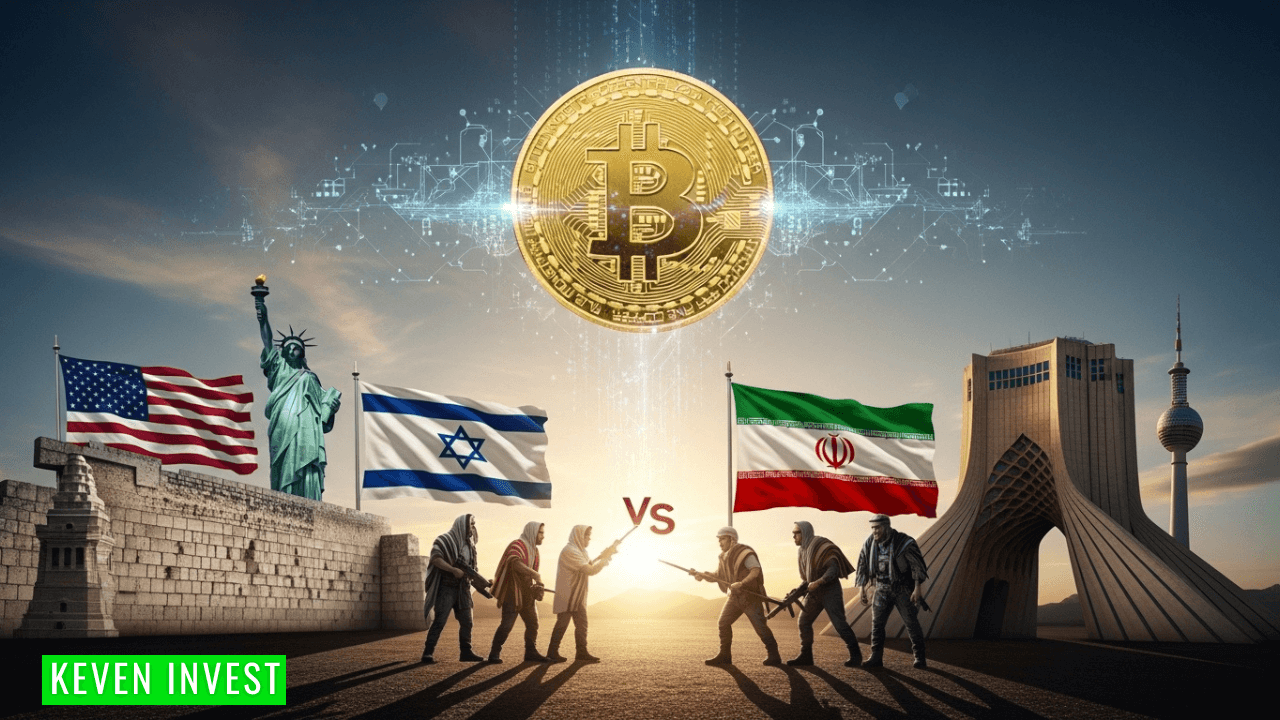
The question dominating the American financial market right now is direct and urgent: what will happen to Bitcoin after this war between the United States, Iran, and Israel?
When we talk about a war between the United States, Iran, and Israel, we are talking about three forces with immediate global impact. The United States is the largest economy in the world. Iran is a key player in global oil supply. Israel is one of America’s main strategic allies in the Middle East. So, any military escalation can generate shockwaves across markets.
And Bitcoin, as a global, decentralized, and highly volatile asset, does not remain unaffected.
The price of Bitcoin responds to macroeconomic factors, Federal Reserve decisions, dollar movements, inflation, oil prices, and, most importantly, investor sentiment. Therefore, understanding what could happen to Bitcoin after this war is not just speculation — it is strategy.
In this complete analysis, you will understand:
-
How wars impact the American market
-
Why Bitcoin reacts to geopolitical conflicts
-
The role of oil and inflation
-
The influence of the Federal Reserve
-
Possible scenarios for the price of Bitcoin
-
What American investors should do
Get ready for a deep, strategic, and educational analysis.
The Global Context: Why This War Could Reshape the Market
The war between the United States, Iran, and Israel is not merely a regional conflict. It can affect energy routes, supply chains, and global monetary policies. And this matters because the American financial market is deeply interconnected with the rest of the world.
When conflict erupts in the Middle East, the first impact is usually on the price of oil. If Iran restricts flow through the Strait of Hormuz, oil prices can surge. Then, automatically, energy costs rise in the United States.
And when energy rises, inflation rises.
And when inflation rises, the Federal Reserve reacts.
And when the Fed reacts, the price of Bitcoin feels it.
Notice how everything is connected.
How Wars Affect the American Market
Immediate impact: fear and volatility
First, the market reacts with fear. Investors seek protection. Stocks fall. Risk assets come under pressure.
Bitcoin, still considered by many to be a risk asset, may drop initially. This happens because investors sell volatile positions to seek liquidity in dollars.
Therefore, in the short term, the war between the United States, Iran, and Israel may generate a decline in the price of Bitcoin.
But the story does not end there.
Secondary impact: inflation and monetary policy
If the conflict drags on, rising oil prices may create persistent inflation in the United States. Then a crucial question arises: what will the Federal Reserve do?
If the Fed raises interest rates to contain inflation, the dollar may strengthen. And a strong dollar usually pressures Bitcoin.
On the other hand, if the government increases military spending and the Fed is forced to stimulate the economy, there may be monetary expansion. And monetary expansion often benefits scarce assets like Bitcoin.
So, what will happen to Bitcoin after this war between the United States, Iran, and Israel depends on the American economic response.
Bitcoin: Risk Asset or Store of Value?
This is the central debate in the American market.
Bitcoin is seen as either:
-
A risk asset, similar to technology stocks
-
A digital store of value, similar to gold
And this perception completely changes the outlook.
If Bitcoin is treated as a risk asset
In a wartime environment:
-
Investors sell
-
The market seeks safety
-
The price of Bitcoin may fall
If Bitcoin is treated as protection
In an environment of monetary instability:
-
Confidence in the traditional system decreases
-
Money printing increases
-
Bitcoin may rise
Therefore, the dominant narrative will be decisive.
The Role of Oil and Inflation
The war between the United States, Iran, and Israel has the potential to significantly raise oil prices. And this is crucial.
More expensive oil means:
-
Higher transportation costs
-
Higher production costs
-
More expensive food
And then American inflation rises.
If inflation rises too much, the Federal Reserve may:
-
Keep interest rates high for longer
-
Delay rate cuts
-
Reduce liquidity in the market
And less liquidity means pressure on the price of Bitcoin.
But if the economy slows due to the war, the Fed may be forced to cut rates. And lower interest rates tend to boost assets like Bitcoin.

The U.S. Dollar and Its Impact on Bitcoin
In times of war, the dollar often strengthens because it is seen as a safe haven.
If the dollar rises significantly:
-
Bitcoin may fall in dollar terms
-
International investors may prefer a strong currency
However, if the conflict generates high fiscal deficits and money printing, the dollar may weaken in the medium term. And in that scenario, Bitcoin may benefit.
So again, the answer to what will happen to Bitcoin after this war between the United States, Iran, and Israel depends on the dollar’s trajectory.
The Role of Bitcoin ETFs in the American Market
Today’s environment is different from past wars. Now there are approved Bitcoin ETFs in the United States.
This means:
-
Large institutions have exposure to the asset
-
Funds can quickly reduce risk
-
Institutional flows impact the price
If there is institutional capital flight, Bitcoin may suffer in the short term. But if institutional investors view Bitcoin as a hedge against geopolitical instability, demand may increase.
And that completely changes the game.
Possible Scenarios for Bitcoin After the War
Scenario 1: Short and controlled conflict
If the war between the United States, Iran, and Israel is limited:
-
Initial volatility
-
Gradual recovery
-
Market returns focus to interest rates and inflation
In this case, the impact may be temporary.
Scenario 2: Prolonged war and persistent inflation
If the conflict lasts for months:
-
Elevated oil prices
-
Stubborn inflation
-
Pressure on the Federal Reserve
In this scenario, the price of Bitcoin may fluctuate significantly. It may initially fall but later rise if monetary stimulus emerges.
Scenario 3: Global financial crisis
If the war generates systemic crisis:
-
Loss of confidence in banks
-
Global instability
-
Search for alternative assets
Bitcoin may assume a structural protection role.
American Investor Psychology
Markets are not driven only by numbers. They are driven by emotions.
During wars, the dominant emotions are:
-
Fear
-
Uncertainty
-
Search for safety
If fear dominates, the price of Bitcoin may fall in the short term. But if the narrative shifts toward protection against monetary instability, Bitcoin may rise.
And that shift can happen quickly.
Short, Medium, and Long Term: What to Expect?
Short Term
High volatility and sharp movements.
Medium Term
Dependence on Federal Reserve decisions and inflation behavior.
Long Term
If the war exposes fragilities in the traditional financial system, Bitcoin may strengthen as a decentralized alternative.
What Investors Should Watch Now
To understand what will happen to Bitcoin after this war between the United States, Iran, and Israel, monitor:
-
Federal Reserve decisions
-
Oil prices
-
Dollar index
-
Bitcoin ETF flows
-
Inflation indicators
These factors will be decisive.

Conclusion: The Future of Bitcoin After This War
The war between the United States, Iran, and Israel may deeply interfere with the price of Bitcoin. In the short term, volatility is likely to increase. In the medium term, inflation and interest rates will be decisive. In the long term, Bitcoin may emerge even stronger, depending on the American economic response.
The key point is that Bitcoin is not isolated. It is part of a globally interconnected system.
So, what will happen to Bitcoin after this war between the United States, Iran, and Israel?
The final answer depends on:
-
Duration of the conflict
-
American monetary policy
-
Dollar behavior
-
Institutional reaction
But one thing is certain: the impact will be real.
And those who understand the macroeconomic landscape have an advantage.
Because in the American financial market, strategic information is not a luxury — it is survival.