The cryptocurrency market has evolved rapidly over the past few years, especially in the American market and economic landscape, where institutional investors, technology companies, and everyday individuals have begun to see digital assets as a new asset class. In this context, many people are familiar with Bitcoin, but few truly understand what altcoins are and, most importantly, what the real difference is between altcoins and Bitcoin.
This article was created to be educational, informative, didactic, and strategic for SEO, using simple, human, and direct language that connects with the reader in a clear and meaningful way. If you want to understand the role of altcoins, how they work, why they exist, and how they differ from Bitcoin, this content is for you.
What Is Bitcoin and Why Was It Created
Bitcoin was created in 2009 by a developer (or group of developers) using the pseudonym Satoshi Nakamoto. It emerged as a direct response to the 2008 financial crisis in the United States, when banks collapsed and governments had to intervene to save the traditional financial system.
The goal of Bitcoin was simple, yet revolutionary: to create decentralized digital money that does not rely on banks, governments, or intermediaries. In doing so, Bitcoin introduced the concept of blockchain, a public, transparent, and immutable ledger.
But although Bitcoin was the first, it was not the last. And this is exactly where altcoins come into play.

What Are Altcoins
Altcoins are all cryptocurrencies that are alternatives to Bitcoin. The name itself comes from the combination of “alternative” and “coins.” In other words, any cryptocurrency that is not Bitcoin is considered an altcoin.
Today, there are thousands of altcoins, each with different purposes, technologies, and objectives. Some were created to fix Bitcoin’s limitations, while others were designed to expand the possibilities of blockchain technology.
In the American market, altcoins have gained attention mainly because of their technological innovation, real-world use cases, and growth potential.
Why Altcoins Were Created
Bitcoin is extremely secure and reliable, but it was not designed to meet all the needs of the modern digital economy. Because of this, developers began creating altcoins with new features and capabilities.
The main reasons behind the creation of altcoins include:
-
Improving transaction speed
-
Reducing fees
-
Enabling smart contracts
-
Creating decentralized applications (dApps)
-
Serving specific sectors such as finance, gaming, and digital identity
As a result, while Bitcoin is often seen as a store of value, many altcoins are viewed as technological infrastructure.
The Fundamental Difference Between Bitcoin and Altcoins
The difference between Bitcoin and altcoins goes far beyond their names. It is deeply connected to their philosophy, function, technology, and use cases.
Bitcoin as a Store of Value
Bitcoin is often referred to as “digital gold”, especially in the United States. This happens because:
-
It has a limited supply (21 million coins)
-
It is highly decentralized
-
It is censorship-resistant
-
It operates on the most secure network in the crypto world
For these reasons, American investors use Bitcoin as a hedge against inflation, economic instability, and aggressive monetary policies.
Altcoins as Platforms and Solutions
Most altcoins, on the other hand, were not created solely to function as money. They operate as technological platforms, enabling:
-
Smart contracts
-
Decentralized finance (DeFi)
-
NFTs
-
Blockchain-based games
-
Tokenization of real-world assets
This distinction is crucial to understanding why Bitcoin and altcoins coexist, rather than directly competing with each other.
Main Types of Altcoins
The altcoin universe is vast, but it can be organized into clear categories, making it much easier to understand.
Platform Altcoins
These altcoins serve as the foundation for other applications. The most prominent example is Ethereum, which is widely used in the American market.
Key characteristics include:
-
Support for smart contracts
-
Hosting thousands of applications
-
Serving as the backbone of DeFi and NFTs
Other examples include Solana, Avalanche, and Polygon.
Stablecoins
Stablecoins are altcoins designed to maintain a stable value, usually pegged to the US dollar.
Popular examples include:
-
USDT (Tether)
-
USDC
-
DAI
In the United States, stablecoins are widely used for:
-
Protection against volatility
-
International payments
-
Liquidity on crypto exchanges
Payment Altcoins
These altcoins aim to improve what Bitcoin started by offering faster and cheaper transactions.
Examples include:
-
Litecoin
-
Bitcoin Cash
-
Dash
Although they receive less attention today, they are still relevant for digital payments.
Utility and Governance Altcoins
These coins allow users to participate in network decisions or access specific services.
They are essential for:
-
Decentralized governance
-
Protocol voting
-
Access to exclusive features

The Role of Altcoins in the American Market
In the United States, altcoins play a strategic role in advancing financial innovation. Major companies, including banks, fintechs, and startups, use altcoin blockchains to develop real-world solutions.
In addition:
-
Universities study altcoins as digital infrastructure
-
Investors view altcoins as growth assets
-
Regulators analyze how to integrate them into the financial system
This environment makes the American market one of the most important for the future of altcoins.
Volatility: Bitcoin vs. Altcoins
A crucial point when comparing Bitcoin and altcoins is volatility.
-
Bitcoin tends to be less volatile
-
Altcoins can rise very quickly, but they can also fall just as fast
This happens because:
-
Altcoins have smaller market capitalizations
-
They are more sensitive to news and regulation
-
They depend more heavily on technological adoption
As a result, American investors often use Bitcoin as a foundation and altcoins as higher-risk, higher-reward assets.
Risk and Return: Understanding the Balance
Investing in altcoins can generate significant returns, but it also involves high risks. Many altcoins fail, lose relevance, or disappear entirely.
Risk factors include:
-
Poorly structured projects
-
Lack of adoption
-
Regulatory challenges
-
Intense competition
Bitcoin, although still volatile, has a more established track record and greater institutional acceptance.
Regulation in the United States
Regulation is a decisive factor in the American market. Bitcoin is widely recognized as a commodity, while many altcoins are analyzed as potential securities.
This directly impacts:
-
Exchange listings
-
Institutional adoption
-
Legal certainty
Therefore, understanding the regulatory differences between Bitcoin and altcoins is essential for any investor.
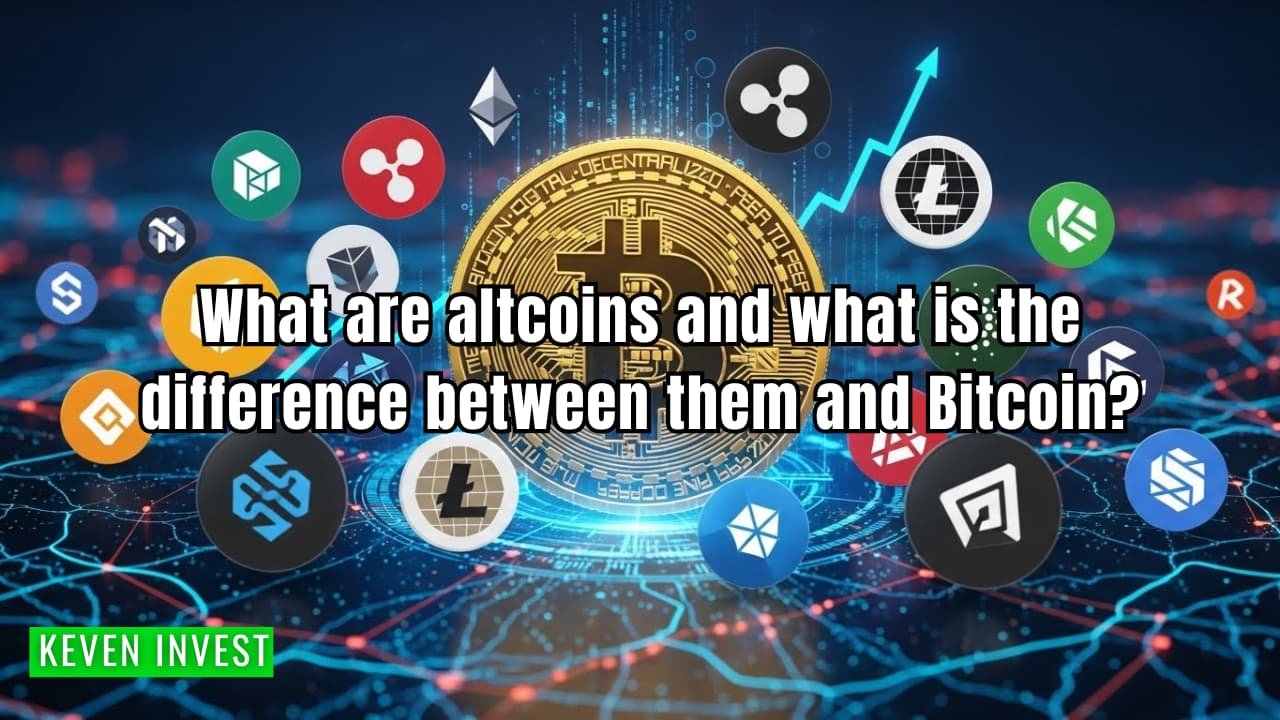
What are altcoins and what is the difference between them and Bitcoin? FIND OUT NOW
Altcoins and Technological Innovation
While Bitcoin prioritizes security and decentralization, altcoins are the primary drivers of innovation in the crypto industry.
Thanks to altcoins, we now have:
-
Decentralized finance (DeFi)
-
NFTs and the creator economy
-
Play-to-earn gaming
-
Metaverse platforms
-
Decentralized digital identity
Without altcoins, the blockchain ecosystem would be extremely limited.
How to Choose Strong Altcoins
Choosing altcoins requires analysis and strategy. In the American market, investors typically evaluate:
-
The project’s team
-
A real and clear use case
-
Strategic partnerships
-
An active community
-
Well-designed tokenomics
In addition, it is crucial to understand that not every altcoin is a good investment, even if it looks promising.
What are altcoins and what is the difference between them and Bitcoin? FIND OUT NOW

Bitcoin and Altcoins in the Long Term
In the long term, Bitcoin is likely to maintain its position as a digital reserve asset. Altcoins, meanwhile, will continue to evolve, with some rising to prominence and others fading away.
This cycle is natural in innovative markets and also occurs in traditional technology sectors.
Conclusion: Bitcoin and Altcoins Are Not Enemies
The truth is that Bitcoin and altcoins do not compete — they complement each other. Bitcoin offers security, scarcity, and trust, while altcoins deliver innovation, flexibility, and new possibilities.
Understanding what altcoins are and the difference between them and Bitcoin allows you to make more informed decisions, especially within the American market, where crypto is increasingly integrated into the financial system.
If you want to navigate this universe intelligently, remember this: knowledge is the most valuable asset. And the more you understand the role of each cryptocurrency, the better prepared you will be for the digital future that is already unfolding.
What are altcoins and what is the difference between them and Bitcoin? FIND OUT NOW