The market for blockchain, digital assets, and cryptocurrencies is growing at an accelerated pace, especially within the American market landscape, where technological innovation, investment, and regulation move forward together. However, despite the sector’s popularity, many people still confuse fundamental concepts. One of the most common is the difference between tokens and cryptocurrencies.
So, what are tokens, how do they work, and how are they truly different from cryptocurrencies? Understanding this distinction is essential for anyone who wants to invest, work in the industry, or simply better understand the crypto ecosystem.
This article was developed to be informative, educational, explanatory, and didactic, using simple, human, and easy-to-understand language. Throughout the text, you will gain a deep understanding of what tokens are, how they are created, what they are used for, how they differ from cryptocurrencies, and the role each plays in the American market.
What Are Cryptocurrencies
Before understanding what tokens are, it is essential to understand what cryptocurrencies are. Cryptocurrencies are digital assets that are native to their own blockchain. This means they exist within a network that was created specifically for them.
The most well-known example is Bitcoin, which operates on the Bitcoin blockchain. Other examples include Ethereum, Solana, and Litecoin, each with its own network.
Cryptocurrencies are primarily used for:
-
Value transfer
-
Digital payments
-
Network security
-
Economic incentives for validators
In the American market, cryptocurrencies are viewed both as financial assets and as technological infrastructure.

What Are Tokens
Tokens are digital assets created on top of an existing blockchain. Unlike cryptocurrencies, they do not have their own blockchain. Instead, they use the infrastructure of networks such as Ethereum, Solana, BNB Chain, and others.
Simply put, while a cryptocurrency is the “native currency” of a blockchain, a token is an asset built on top of that blockchain.
Tokens can represent almost anything:
-
Rights
-
Access to services
-
Participation in projects
-
Financial assets
-
Digital or real-world goods
Because of this flexibility, tokens have become extremely popular within the crypto ecosystem.
Why Tokens Were Created
Tokens emerged because developers realized it was possible to use existing blockchains to create new digital assets without building an entire network from scratch.
This brought major advantages:
-
Lower development costs
-
Higher security
-
Integration with existing ecosystems
-
Faster adoption
So, instead of creating a new cryptocurrency with its own blockchain, many projects chose to create tokens, especially in the American market, where efficiency and scalability are priorities.
The Fundamental Difference Between Tokens and Cryptocurrencies
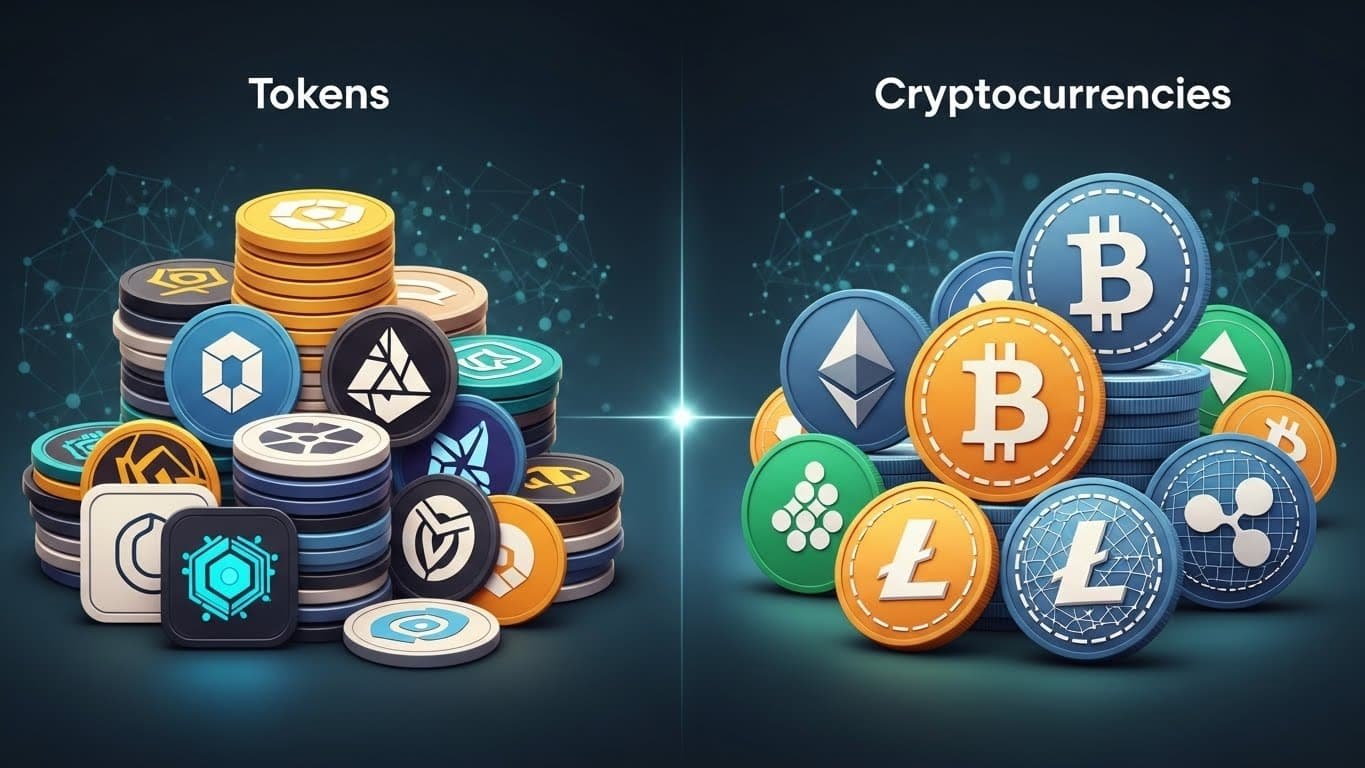
The main difference between tokens and cryptocurrencies lies in the infrastructure.
-
Cryptocurrencies have their own blockchain
-
Tokens rely on an existing blockchain
This technical distinction directly impacts how they function, what they are used for, and how they are applied in the market.
Cryptocurrencies as the Network Foundation
Cryptocurrencies are essential to blockchain operation. They are used to:
-
Pay transaction fees
-
Incentivize validators or miners
-
Maintain network security
Without cryptocurrencies, a blockchain simply cannot function.
Tokens as Application Layers
Tokens function as application layers. They use the blockchain to execute specific rules, contracts, and functionalities.
Because of this, tokens are extremely versatile and enable the creation of:
-
Decentralized applications
-
Financial protocols
-
Governance systems
-
Digital economies
Main Types of Tokens
To fully understand what tokens are, it is important to know their main categories.
Utility Tokens
Utility tokens provide access to products or services within an ecosystem. They do not represent ownership, but rather usage.
They are used to:
-
Access platforms
-
Pay internal fees
-
Use specific features
This type of token is very common in technology-driven projects in the American market.
Governance Tokens
Governance tokens allow users to participate in decisions within a protocol or platform.
With them, users can:
-
Vote on proposals
-
Change system rules
-
Define development priorities
They are fundamental to the concept of decentralization.
Financial Tokens (Security Tokens)
These tokens represent financial assets, such as shares, ownership stakes, or rights to revenue.
In the American landscape, this type of token receives special attention due to regulation, as many are treated as securities.
Stablecoins
Stablecoins are tokens designed to maintain a stable value, usually pegged to the US dollar.
They are used to:
-
Reduce volatility
-
Facilitate payments
-
Bridge traditional finance and crypto
In the American market, stablecoins are essential for institutional adoption.
NFTs (Non-Fungible Tokens)
NFTs are unique tokens used to represent exclusive digital assets.
They are commonly used for:
-
Digital art
-
Music
-
Gaming
-
Collectibles
-
Digital identity
NFTs have transformed the creative economy in the United States.
How Tokens Work in Practice
Tokens operate through smart contracts, which are programmable codes that execute automatically on the blockchain.
These contracts define:
-
Token supply
-
Usage rules
-
Transfer conditions
-
Permissions
This makes tokens transparent, automated, and trustless, eliminating the need for intermediaries.
Token Standards
To ensure compatibility, tokens follow technical standards. The most widely known is ERC-20, from the Ethereum network.
These standards enable:
-
Exchange integration
-
Wallet compatibility
-
Application development
Thanks to these standards, the token market has grown rapidly.
Tokens and Cryptocurrencies in the American Market
In the American market, tokens and cryptocurrencies are viewed differently.
-
Cryptocurrencies: infrastructure and store of value
-
Tokens: innovation, applications, and new business models
Startups, companies, and institutions use tokens to create solutions in:
-
Finance
-
Technology
-
Healthcare
-
Gaming
-
Logistics
Risks Associated with Tokens
Although powerful, tokens also come with risks.
The main risks include:
-
Smart contract vulnerabilities
-
Projects with weak fundamentals
-
Regulatory risks
-
Scams and fraud
For this reason, understanding what tokens are also means understanding their risks.
Tokens vs. Cryptocurrencies: Which Is Safer?
Security depends on context.
-
Established cryptocurrencies tend to be safer
-
Tokens offer more innovation but higher risk
In the American market, investors often balance both within their portfolios.
Tokens and Financial Innovation
Tokens have revolutionized finance by enabling:
-
Decentralized finance (DeFi)
-
Automated lending
-
Passive income strategies
-
Tokenization of real-world assets
This innovation is one of the pillars of today’s digital transformation.
Tokenization of Real-World Assets
One of the biggest trends in the American market is the tokenization of real-world assets.
This includes:
-
Real estate
-
Stocks
-
Bonds
-
Commodities
Tokens enable fractional ownership, liquidity, and global access.
Value Differences Between Tokens and Cryptocurrencies
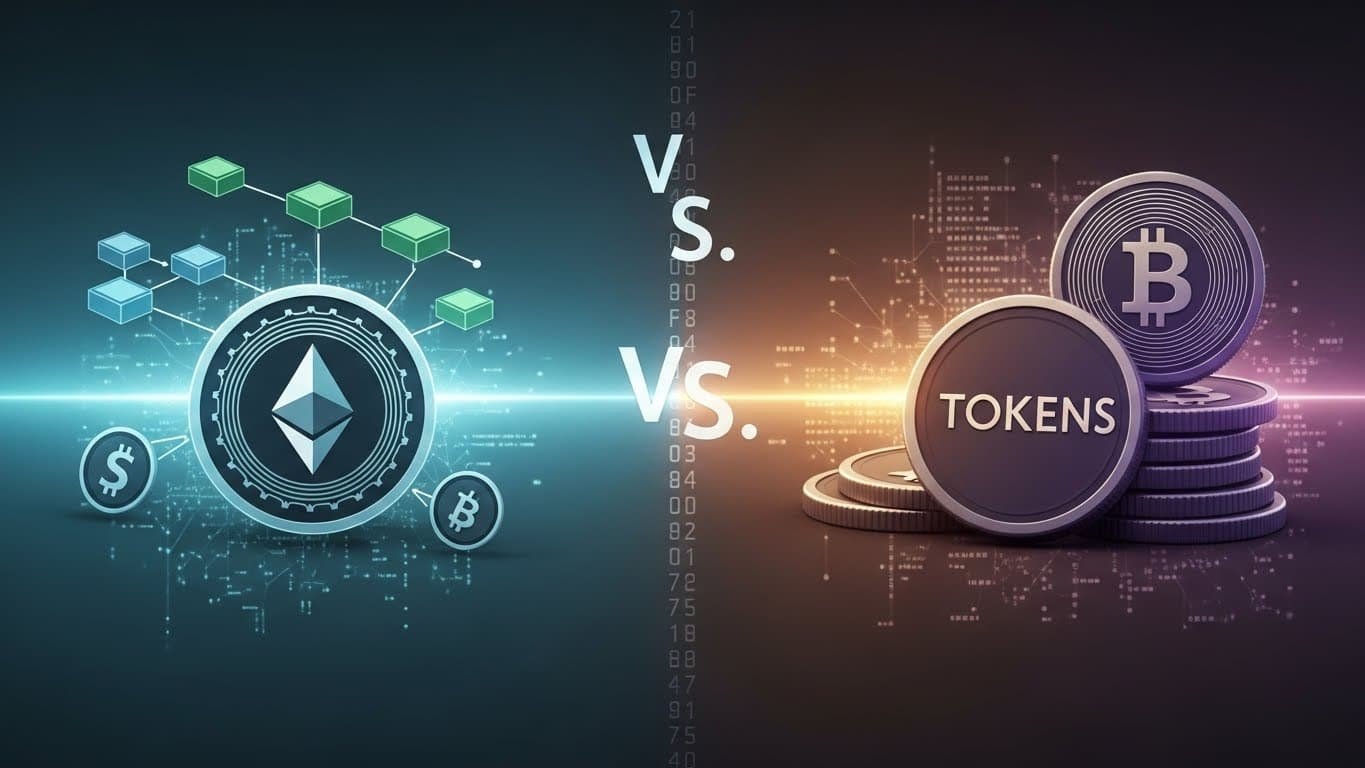
Cryptocurrencies tend to derive value from network security. Tokens, on the other hand, derive value from utility, demand, and adoption.
As a result, the factors that influence their prices are different.
How to Choose Strong Tokens
Before investing, it is essential to analyze:
-
Real use cases
-
The project team
-
Tokenomics
-
Community engagement
-
Regulatory compliance
This level of care is especially important in the American market.
Stablecoins: What they are, how they work, and what they are for. FIND OUT NOW
The Future of Tokens
The future of tokens is tied to institutional adoption, clear regulation, and practical use. Many tokens will disappear, but others will become essential components of the digital economy.
Tokens and Web3
Tokens are the foundation of Web3, the next phase of the decentralized internet.
They enable:
-
Digital ownership
-
Native digital economies
-
User autonomy
Without tokens, Web3 cannot exist.
Conclusion: Tokens and Cryptocurrencies Are Not the Same
Although they are connected, tokens and cryptocurrencies are not the same. Cryptocurrencies form the foundation of blockchains, while tokens expand their possibilities.
Understanding what tokens are and how they differ from cryptocurrencies is essential for navigating the crypto market safely and intelligently—especially within the American market, where innovation and investment go hand in hand.
In the end, tokens are not just digital assets. They are tools of transformation, and understanding how they work today is key to preparing for the future of the digital economy.
Stablecoins: What they are, how they work, and what they are for. FIND OUT NOW