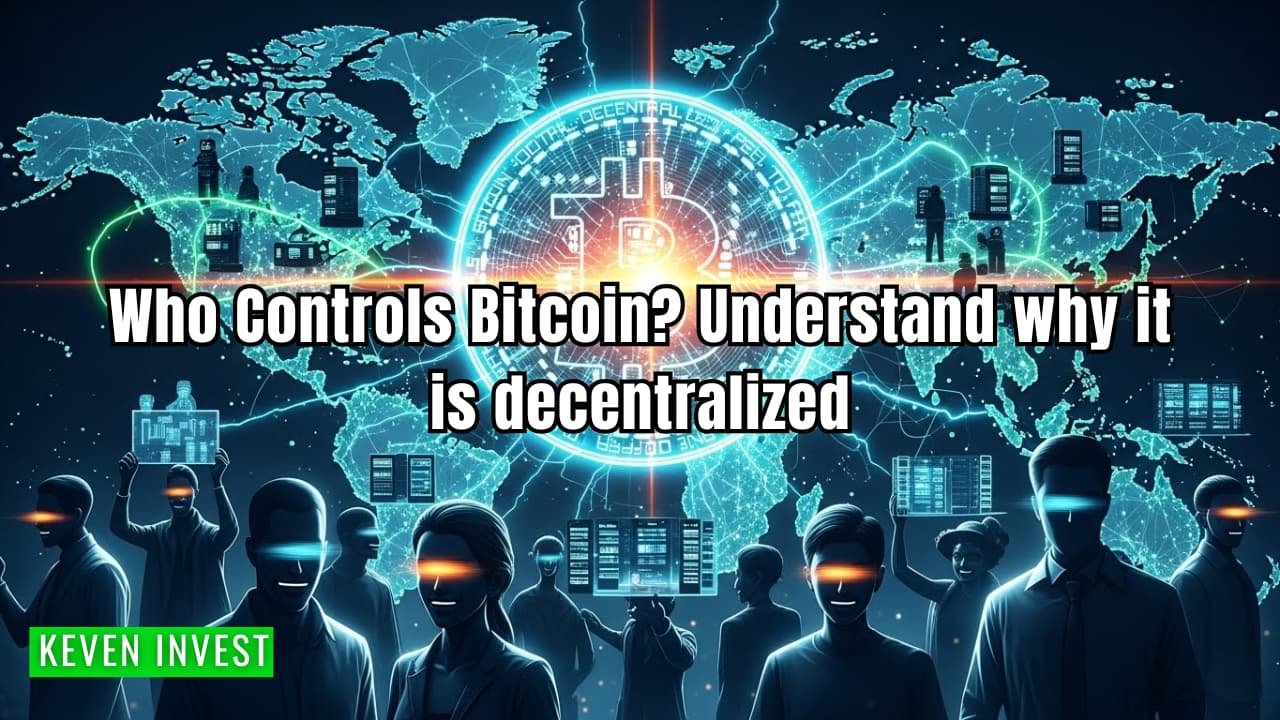
Bitcoin sparks curiosity, excitement, and also skepticism. One of the most common questions, especially among beginners, is simple and powerful: who controls Bitcoin? After all, we are used to centralized financial systems, where governments, central banks, and large institutions set the rules. However, Bitcoin was created precisely to challenge this traditional model.
In this article, you will understand in a clear, educational, and in-depth way why Bitcoin is considered decentralized, who actually participates in its operation, and why this completely changes the way we think about money. More importantly, you will see why decentralization is one of Bitcoin’s greatest strengths, especially in today’s global economic landscape.
What Control Means in the Traditional Financial System
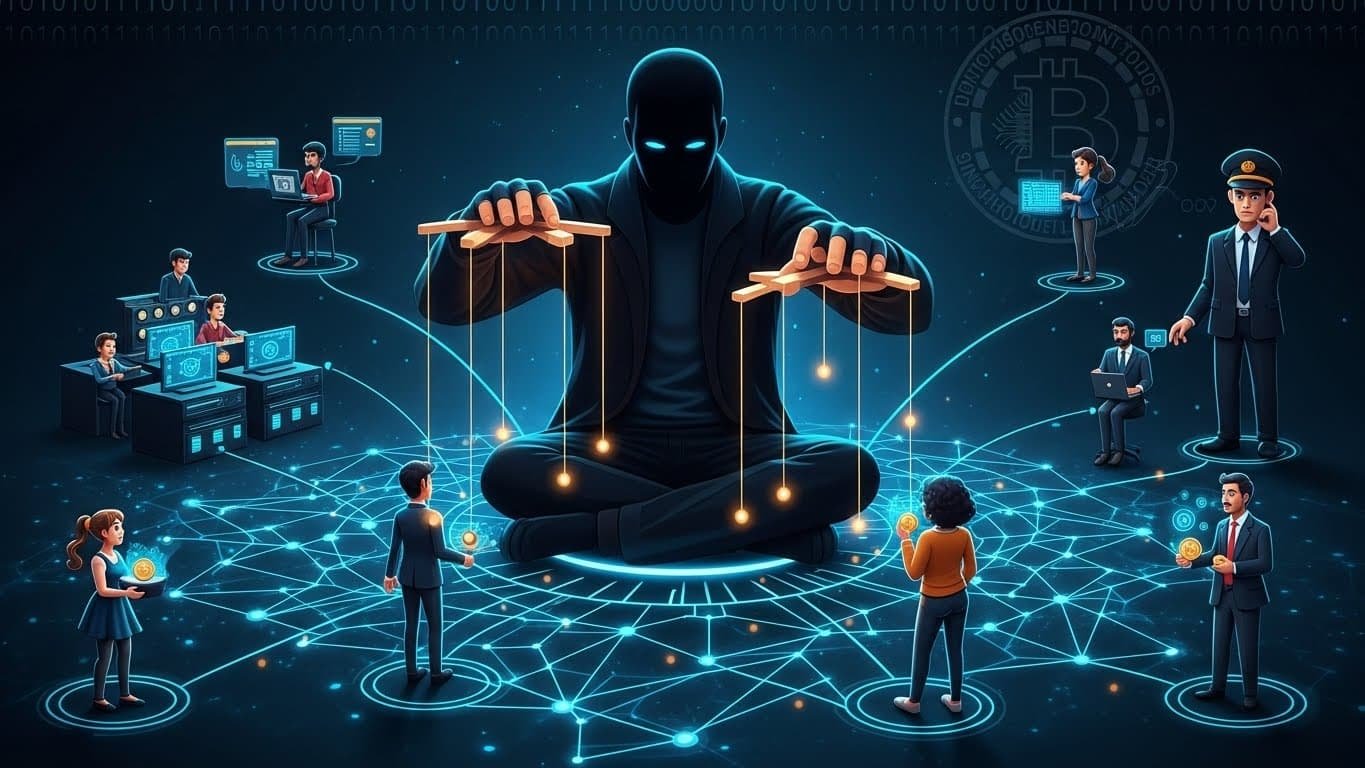
Before talking about Bitcoin, it is essential to understand how traditional money control works. In today’s system, currencies like the U.S. dollar are controlled by central banks. These institutions decide how much money is created, when interest rates rise or fall, and how the economy reacts to crises.
In addition, commercial banks act as intermediaries. They authorize transactions, freeze accounts, charge fees, and often limit access to your own money. Therefore, there is a centralized control, based on trust in authorities.
But what happens when that control fails? And what if political or economic decisions harm the population? That exact question led to the creation of Bitcoin.
The Birth of Bitcoin and the Idea of Decentralization
Bitcoin was created in 2008 by a person or group using the name Satoshi Nakamoto. The idea was clear: build a decentralized financial system where no single entity holds absolute power.
Instead of trusting governments or banks, Bitcoin relies on mathematics, cryptography, and distributed consensus. In other words, the rules are public, transparent, and automatically enforced by the network.
That is why, from the very beginning, Bitcoin was designed to have no owner, no central authority, and no dependence on intermediaries.
So, Who Controls Bitcoin?
The short answer is: no one controls Bitcoin alone. However, the complete answer is far more interesting.
Bitcoin works because different participants play specific roles. Together, they keep the network secure, functional, and decentralized.
Let’s break this down.
Developers: Who Write the Code
Bitcoin developers work on the open-source software that powers the network. Anyone can review the code, suggest improvements, or propose changes.
However, developers cannot force updates. They can only propose them. The final decision always depends on whether the network accepts those changes.
This means that even developers do not control Bitcoin.
Miners: Who Validate Transactions
Miners are responsible for validating transactions and adding new blocks to the blockchain. They use computational power to solve complex mathematical problems.
However, there is a critical rule: miners must follow the protocol. If they try to cheat or change the rules, their blocks are rejected by the network.
Therefore, miners do not control Bitcoin either—they simply help it operate.
Nodes: The True Guardians of the Network
Nodes are computers spread around the world that store a full copy of the Bitcoin blockchain. They verify whether all the rules are being followed.
If a miner or developer tries to introduce an invalid change, nodes simply reject it.
Because of this, nodes are considered the foundation of Bitcoin’s decentralization.
Users: Who Give Bitcoin Its Value
Without users, Bitcoin would have no value. People who buy, sell, store, and use Bitcoin keep the network alive.
Every user who controls their own private keys reinforces Bitcoin’s core principle: individual control over money.
Why Decentralization Matters So Much
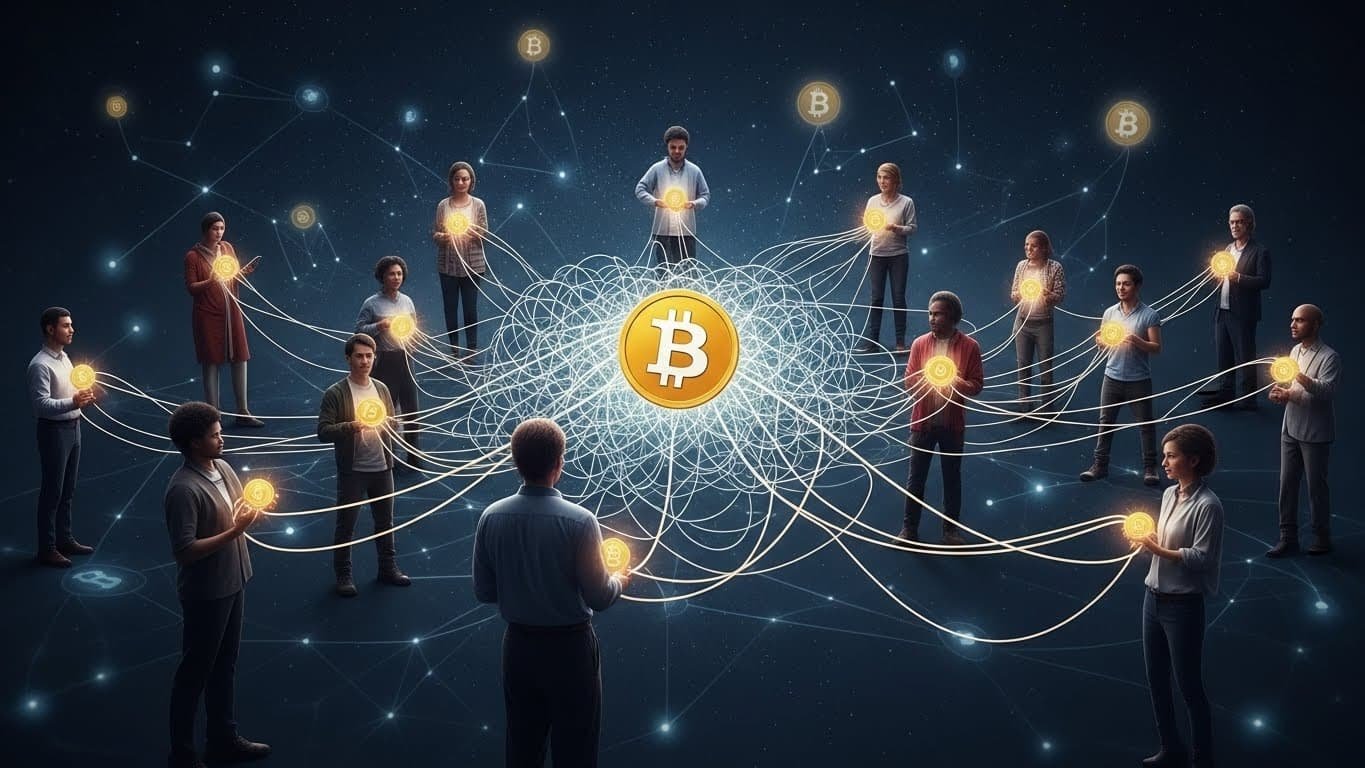
Decentralization is not just a technical detail. It is what makes Bitcoin censorship-resistant, secure, and global.
Because Bitcoin does not rely on a central server, it cannot be easily shut down. Moreover, no authority can block a valid transaction.
This makes Bitcoin especially relevant in countries with high inflation, capital controls, or weak banking systems.
Bitcoin vs. Banks: A Direct Comparison
In traditional banks, you need permission to move your money. With Bitcoin, all you need is your private key.
While banks can freeze accounts, Bitcoin offers financial sovereignty. While governments can print unlimited money, Bitcoin has a fixed supply of 21 million coins.
So, decentralization is not only ideological—it is practical.
The Myth That “Whales” Control Bitcoin
Many people believe that large investors, known as “whales,” control Bitcoin. While it is true that some addresses hold large amounts, this does not mean they control the network.
They cannot change the rules, create more coins, or block transactions. At most, they can influence price movements in the short term.
In other words, market influence is not the same as system control.
What are altcoins and what is the difference between them and Bitcoin? FIND OUT NOW
The Role of Governments in the Bitcoin Ecosystem
Governments can regulate exchanges, collect taxes, and create laws. However, they do not control the Bitcoin protocol.
Even if a country bans Bitcoin, the network continues operating elsewhere. Additionally, users can transact directly, without intermediaries.
That is why Bitcoin is considered borderless and global.
Is Bitcoin’s Decentralization Perfect?
Although Bitcoin is highly decentralized, it is not perfect. Mining concentration in certain regions and energy dependence are real challenges.
However, the network continuously evolves. Renewable energy, protocol upgrades, and wider node distribution strengthen decentralization over time.
Why Understanding This Changes Your View of Money
When you understand that no one controls Bitcoin, you also realize that it represents a profound shift in how money works.
Bitcoin gives individuals the power to store, transfer, and protect their wealth without relying on third parties.
This does not mean traditional systems will disappear, but it does mean there is now a real alternative.
What are altcoins and what is the difference between them and Bitcoin? FIND OUT NOW

Bitcoin Is Decentralized by Design
Bitcoin’s decentralization is not accidental. It was embedded from the very first block, known as the Genesis Block.
Every technical decision reinforces this principle. Every participant helps keep it alive.
And that is exactly what makes Bitcoin so difficult to control, censor, or destroy.
Conclusion: So, Who Really Controls Bitcoin?
Bitcoin is not controlled by banks, governments, or corporations. It is governed by mathematical rules, network consensus, and voluntary participation.
This is its greatest strength—and its biggest difference.
Once you understand this, you stop seeing Bitcoin as a risky mystery and start seeing it for what it truly is: a decentralized, transparent, and global financial system.
What are altcoins and what is the difference between them and Bitcoin? FIND OUT NOW